Brampton is entering a new era—one that will transform healthcare in our city for generations to come.
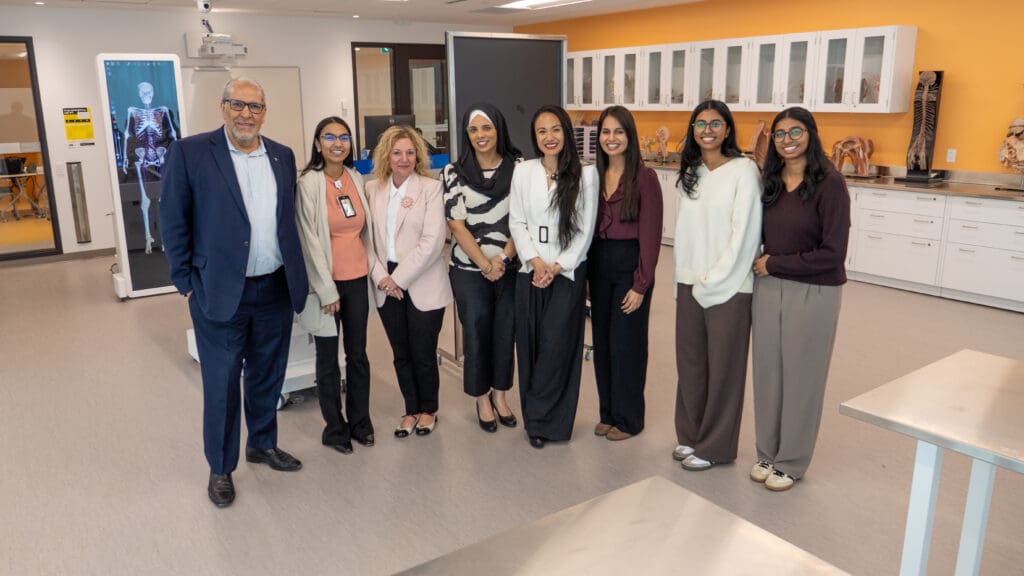
Recently, I had the privilege of touring the new Toronto Metropolitan University School of Medicine campus here in Brampton alongside President Mohamed Lachemi, faculty, and students. What I saw was more than a medical school. It was a bold, innovative model designed specifically for our community.
Why This Medical School Matters for Brampton
For too long, Brampton has faced real challenges when it comes to accessing healthcare. Finding a family doctor has not been easy. Emergency rooms have been under pressure. Too many residents have had to leave the city just to receive care.
This medical school is a direct response to those realities.
- It is training doctors right here in Brampton, with the goal of keeping them here
- It is focused on family medicine and primary care, where our need is greatest
- It is built around real community cases, not just textbook learning
- It integrates education, care, and community services under one roof
As we heard during the tour, this is the first medical school to launch with an intentional focus on family medicine while also operating as a health service provider from day one.
That is a fundamental shift in how medical education supports real communities.
A Direct Benefit to Residents
One of the most exciting parts of the visit was the Integrated Health Centre, which has already opened its doors to residents.
This is not a traditional clinic. It is a team based model where care is coordinated around the patient and their family.
- Care teams include physicians, nurses, social workers, dieticians, and mental health professionals
- Residents can access both primary care and after hours urgent care
- Patients receive more comprehensive, wraparound support
The scale of this impact is significant. The centre is designed to serve over 14,000 patients and support approximately 100,000 visits each year .
For a city that has long been underserved, this represents real, measurable progress.
Training Doctors for Brampton, in Brampton
What makes this school truly unique is how it teaches medicine.
Students are not learning in isolation. They are learning through real cases that reflect Brampton’s diverse population. They are working in small groups alongside physicians who have spent years serving this community.
- Over 650 local physicians have already joined as clinical faculty
- Students are mentored by doctors who understand the needs of Brampton residents
- Learning is collaborative, practical, and grounded in lived experience
This model builds not just clinical knowledge, but a deep understanding of community care.
Even more importantly, it creates a pipeline. Students train here, build connections here, and are far more likely to stay and practice here.
Inside the Tour: Innovation at Every Step
Walking through the campus, it was clear that this is not a traditional medical school.
A Campus Built for Community
The school is located in the former Civic Centre, right in the heart of Brampton. This was a deliberate choice.
It is close to transit, surrounded by neighbourhoods, and visible to young people who can now see themselves pursuing a future in healthcare.
The building itself reflects:
- Indigenous design principles
- Community input
- Open, flexible, and collaborative spaces
There is a strong sense that this space belongs to the community.
A New Way of Learning Medicine
Inside the classrooms, the learning environment feels very different from what many would expect.
Students work in small groups, guided by practicing physicians, discussing real world cases that reflect the health challenges seen in Brampton.
They are not memorizing information in isolation. They are learning how to think, collaborate, and problem solve in ways that directly translate to patient care.
Students shared how meaningful it is to learn from local physicians and to build relationships with the same group over time. That continuity creates a strong sense of community within the program itself.
The Most Advanced Medical Technology
The innovation in this building is remarkable.
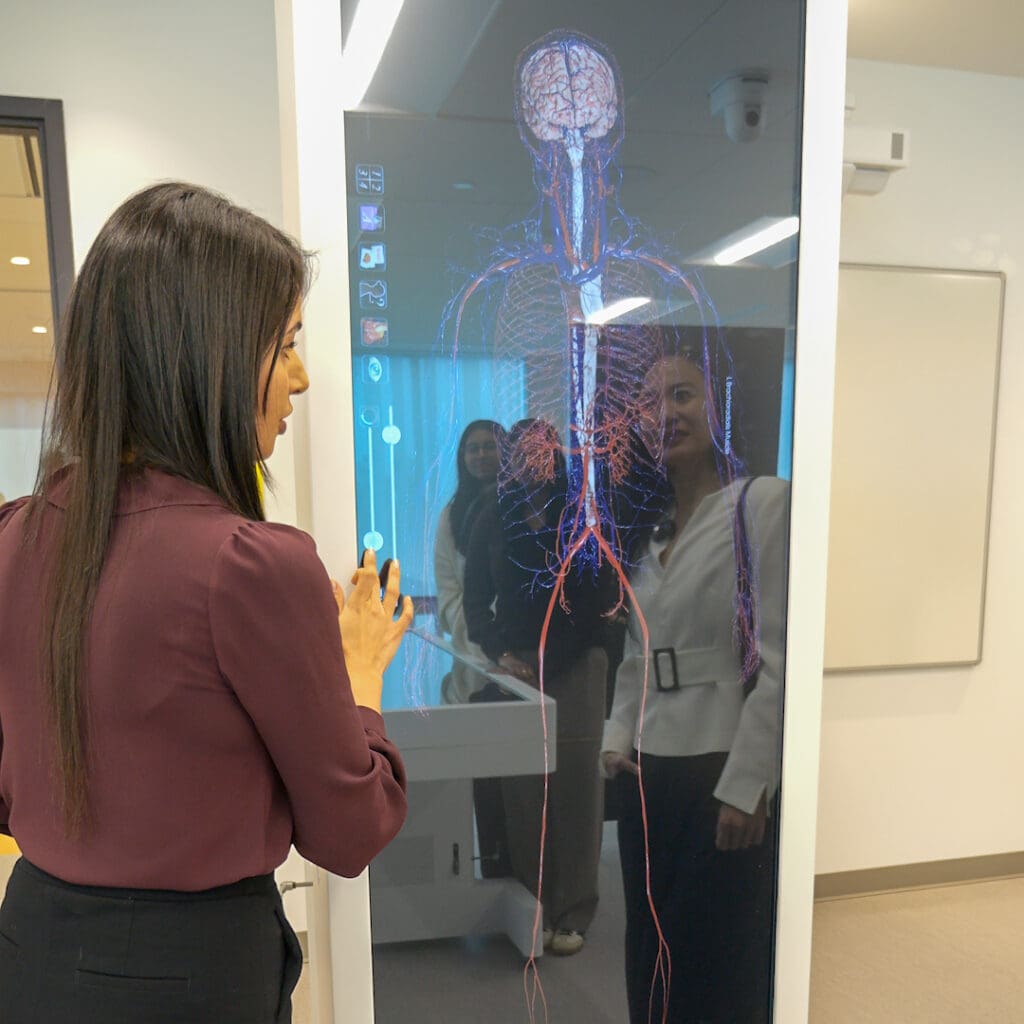
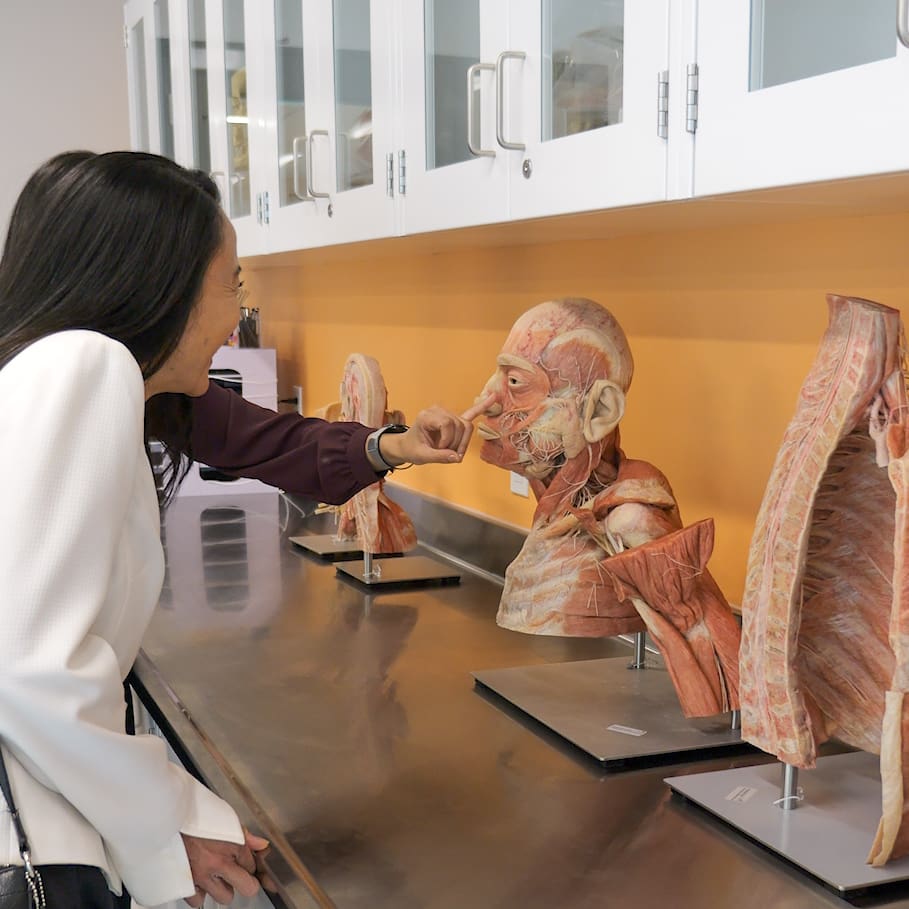
Hybrid Anatomy Lab
- Real human donor specimens preserved using advanced techniques
- Digital dissection tables that allow students to explore the body layer by layer
- Integration of real clinical imaging such as MRI and CT scans
Simulation Labs
- Full hospital environments with high fidelity patient simulators
- Ability to practice complex procedures and emergency scenarios
- Real time feedback through recorded simulations and debrief sessions
These tools allow students to learn in a way that is immersive, practical, and aligned with real world healthcare environments.
A Space That Belongs to the Community
One of the most powerful aspects of the tour was seeing how deeply connected the school is to the community.
- The theatre continues to host community programming
- High school students can take courses and earn university credits
- Community partnerships help shape both education and care
This is not a closed academic institution. It is a shared civic space that continues to serve residents in multiple ways.
A Generational Investment
This project is the result of years of advocacy, collaboration, and vision.
What stood out most during the tour is that this is not just about building a medical school. It is about rethinking how healthcare is delivered.
It is about:
- Expanding access to care
- Training doctors who understand the community
- Creating a model that can be replicated across the country
The impact of this investment will be felt for generations.
Looking Ahead
We are only at the beginning. The Integrated Health Centre has just opened, students are beginning their journeys, and the first graduates are on the horizon. But already, the momentum is clear. This is what it looks like when a city invests in its future, builds capacity from within, and creates solutions that reflect the real needs of its people. Brampton is not just catching up. We are leading. And this is only the beginning.